
A million prayers
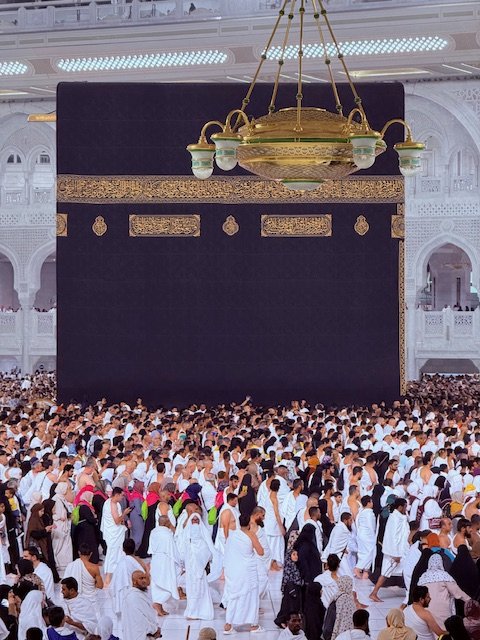
The Kaaba, Masjid al-Haram, Mecca
Dear friends,
It will likely take me a long time to fully process my recent Umrah pilgrimage to Mecca and trip to Medina, but I did want to share a few reflections with you, especially during Islamic Heritage Month.
My overwhelming feeling during this journey was one of awe. It started as soon as Arif and I arrived in our hotel room in Mecca, I pulled back the curtain to see a tide of people dressed in black and white walking towards the Haram (the Sacred Mosque)—a mass of humanity being pulled by an invisible undeniable gravitational force. Knowing that I would soon join this flow of worshipers from every corner of the world felt comforting, liberating, strangely calming despite the estimated one million people there. You feel small and vast at the same time—part of a community, a history, a legacy, a story so much bigger than yourself.
It is an indescribable feeling when you first lay eyes on the Kaaba (the cube-shaped building, Islam’s holiest site), no matter how many times you may have seen it before (for Arif it was the first time; my last trip to Mecca was 40 years ago). As you walk towards it, you keep your eyes lowered, saying Labbayk Allahumma Labbayk (Here I am, O Allah, here I am). When the Kaaba comes into full view, you look up. Awe doesn’t even begin to capture that moment. Every Muslim anywhere prays towards the Kaaba, the image is imprinted in our minds. Now I was standing right in front of it, facing the house of God directly. It is such an overwhelming feeling of humility, love, gratitude, blessing, you can’t help but cry.
We joined the thousands of people doing tawaf, walking around the Kaaba seven times reciting prayers. Everyone is in a state of physical and spiritual purity, ihram, dressed in simple garb—for men, two pieces of white cloth; for women, modest clothing. This symbolizes that we are all equal before God. I tried to recite from the Arabic prayer booklet around my neck, but it was impossible to read in such a mass of people—there were large groups walking together arms locked, parents carrying children on their shoulders, people pushing closer to the Kaaba’s black stone lost fervently in prayer. I held onto Arif’s arm and prayed from my heart—every wish, every anguish I could think of; prayers of gratitude and for forgiveness; prayers for family and friends; prayers that many of you shared with me; prayers for Palestine; prayers to end all people’s suffering. When we completed seven rounds (tracking on my ring counter) and moved out of the circle, others joined in. And so it continues. As it has for centuries, as it will for centuries.
The next part of Umrah, Sa’i, involves walking between Safa and Marwa seven times, commemorating Hajar’s search for water for her baby Ismail between these two hills in the desert; a story that symbolizes patience, perseverance, and absolute faith. I thought about all the mothers searching for sustenance for their children, especially in Palestine and Sudan; I prayed for my own mothers. I said the heartfelt prayers that Saanya and Zayd had written down in my prayer book, pleading for these prayers to be answered. I prayed to end all children’s suffering.
Performing Umrah is simultaneously the most communal feeling—you’re performing rituals with a million people—and the most intimate experience: each of us in private conversation with God.
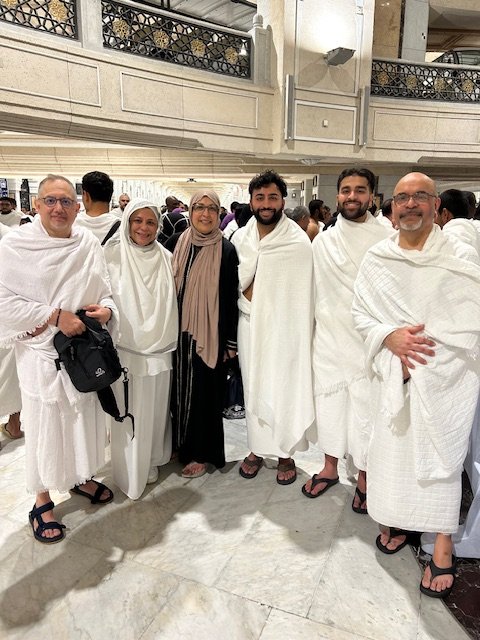
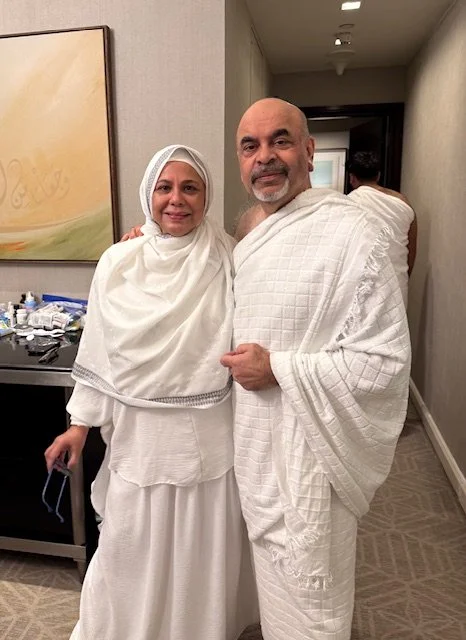
With my brother, sister-in-law, nephews, and Arif after completing Umrah. We started on the evening of January 1st, and finished on Jummah, Friday, our holy day. Alhumdulillah.
I would marvel at the sea of people around me, every face distinct, each person carrying a unique story. People from so many countries, different nationalities and cultures, from small villages and big cities, young and old. Some likely saved their entire lives to make this journey. For some it may have been their first time leaving home, or their first flight. What brought each person here at this moment, I wondered.
What is each person praying for? What burdens are they letting go as they rest their foreheads on the white marble? From what hardships are they asking for ease?After one Maghrib prayer I turned to the woman on my right and introduced myself and asked if she was from Pakistan. “India”, she smiled. I said in Urdu, “May I ask you, what is your most yearned-for prayer.” “That I can stay here,” she said instantly. “I don’t want to leave.”
My neighbor on the left was an elderly woman in a wheelchair, her hands cupped towards heaven. I asked her daughter who sat beside her—they were from Morocco, living in Holland—if she wouldn’t mind asking her mom what she was praying for so I could pray for her too. “I don’t need to ask,” the daughter replied, “I know what she’s always praying for. For her son, who died a few months ago.” “I am so sorry,” I said, gently touching her mother’s arm. “She can accept her parents’ passing—that’s the nature of things—but a child dying before a parent is too much to bear,” her daughter said. “May I ask how he passed?” Cancer, she said. I told her about my breast cancer. She took my hand in hers, “Only God knows, may He protect you.”
It was a brief exchange, but I can’t stop thinking about it, especially this week with the heartache in this country. Imagine if we took a moment to ask our neighbor on our right and on our left what their deepest yearnings are. How different the world would be.
What I miss the most since returning home is the profound closeness to God that I felt in Mecca and Medina; I felt quite literally wrapped in His mercy and compassion. Not just because of the sacred geography and the communal rhythm of prayers, but in the simpler graces too: in the gentle breeze breaking the afternoon heat; in the taste of sweet dates a young girl passed around after Isha prayers; in the synchronous dance of pigeons in the early morning light that made me gasp every single time; in knowing I could say assalamu alaikum to any of the million people there and feel a sense of ‘home’.
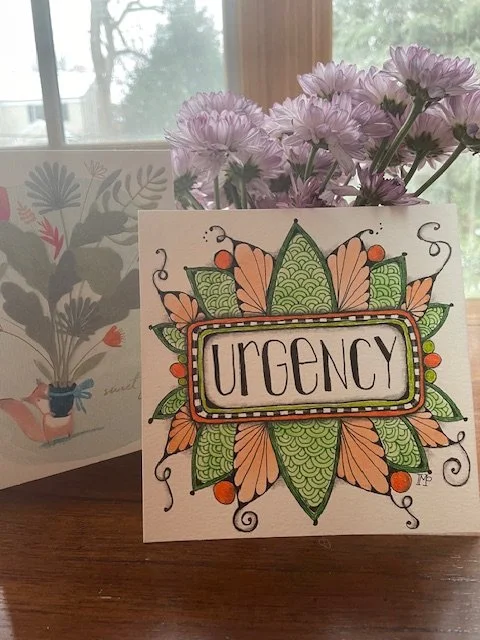
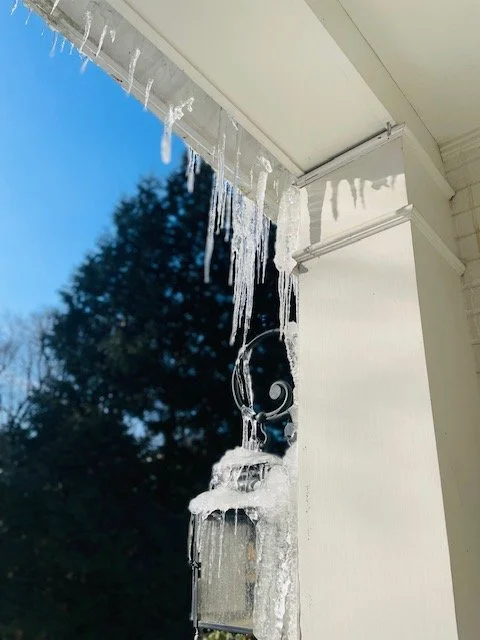
The challenge is to hold on to this feeling and notice it in everyday wonders at home—the icicles glistening from the gutters outside my office window; the unexpected handmade gift on my return from my annual cancer checkup in NYC last week; being able to hug my best friend’s new granddaughter, mA.
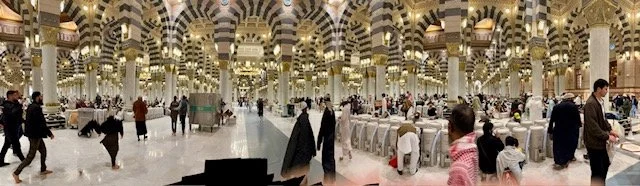
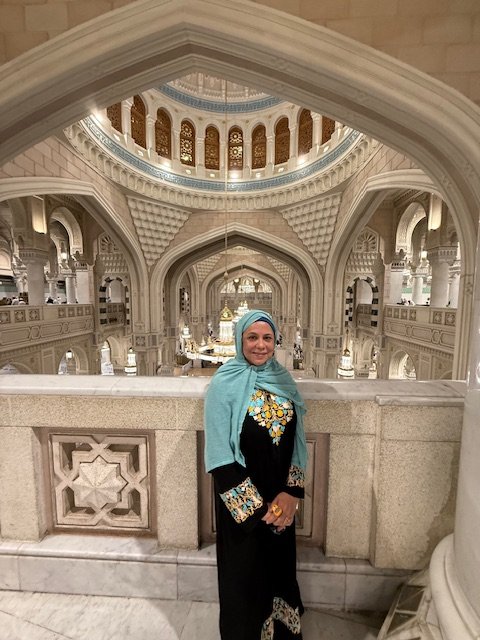
Al Masjid-e-Nabawi, the Prophet’s Mosque, Medina
You were part of this journey too. Thank you for sharing your prayers with me, I was overwhelmed with your trust. I gathered each message, from emails, WhatsApp, texts, phone calls, and wrote them down in a small black notebook and read them with all my heart as I performed tawaf and sai’i.
May we continue to ask each other, our neighbor on our right and our neighbor on our left, what our deepest prayers are. May we hold these longings as closely as we do our own.
With my gratitude and love, and with endless prayers for humanity and peace,
Salma
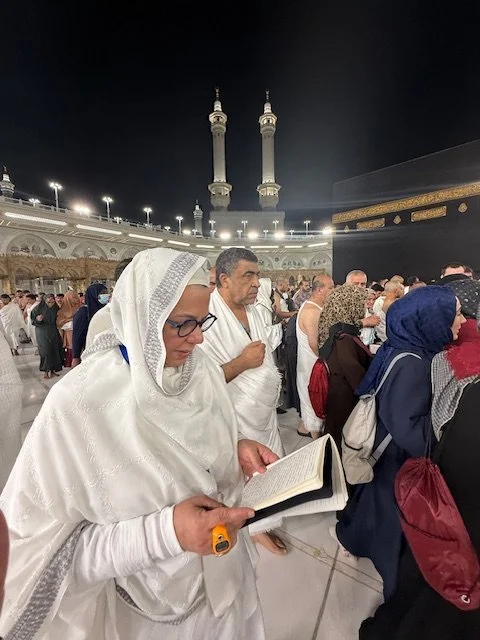
Saying your prayers; may they be accepted. Ameen.
This is newsletter #59. If you know anyone who might enjoy this newsletter, they can subscribe for free here. A few past newsletters:
It took just six words (this is 59!)
Mom, memory, and finding meaning
Following a story’s thread home
My dad’s wisdom that guides me every day
“You will be someone’s ancestor”
How sharing my story is helping me heal
If the hat fits (This too has passed)
My soundtrack for proton radiation
The unexpected blessings of falling ill